About Soil Hydrometer
A
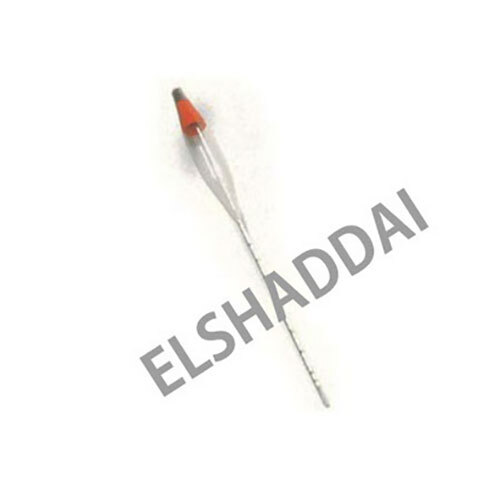
Soil Hydrometer is a precision instrument predominantly used in geotechnical engineering and soil mechanics laboratories for the
particle size analysis of fine-grained soils, specifically
silt and clay fractions. While sieve analysis is effective for coarser particles, the hydrometer method leverages the principle of sedimentation to determine the distribution of particles smaller than the No.
Precision Measurement for Soil AnalysisThis soil hydrometer is engineered to offer high accuracy in analyzing soil samples, ensuring reliable particle size distribution and specific gravity assessment. Its graduated scale provides readings at two-minute intervals for up to 60 minutes, adhering to both IS 2720 (Part IV) and ASTM D422 standards. Laboratories benefit from its precise calibration and robust, corrosion-resistant construction.
Durable Materials for Long-Lasting PerformanceManufactured using high-quality special laboratory glass and mild steel, this hydrometer is built to endure regular laboratory use. The cylindrical shape, corrosion resistance, and temperature durability up to 60C make it a reliable tool for soil testing over extended periods, providing consistent and repeatable results.
User-Friendly and Easy to MaintainFeaturing clear, easy-to-read markings and manual control, the hydrometer simplifies routine soil analysis. Its ergonomic design facilitates efficient handling while the construction materials ensure simple cleaning and corrosion prevention, fitting seamlessly into a laboratory's workflow.
FAQ's of Soil Hydrometer:
Q: How does the soil hydrometer measure particle size distribution in soil samples?
A: The soil hydrometer determines particle size distribution by measuring the suspension's specific gravity change over time as soil particles settle. As readings are taken every 2 minutes for 60 minutes, the gradual reduction in density reflects the settling rates of various soil fractions, providing detailed distribution data.
Q: What is the recommended process for using this soil hydrometer according to IS 2720 (Part IV) and ASTM D422?
A: To use this hydrometer, soil is dispersed in a cylindrical container, and the device is immersed up to its 270 mm depth mark. Readings are then recorded every 2 minutes for an hour. This procedure aligns with IS 2720 (Part IV) and ASTM D422 standards for accurate soil particle analysis.
Q: When should calibration of the hydrometer be verified?
A: Calibration should be checked before initial use and routinely thereafter to ensure measurement accuracy, particularly if the hydrometer is transferred between laboratories, stored for long periods, or after any physical impact.
Q: Where is this soil hydrometer commonly used?
A: This hydrometer is primarily used in laboratory environments for soil analysis, commonly found in research institutions, testing facilities, educational labs, and soil investigation sites. It is particularly useful where precise soil particle size analysis is a requirement.
Q: What are the key benefits of using this corrosion-resistant hydrometer?
A: The primary benefits include high accuracy (0.25 g/L), durable corrosion-resistant materials, easy-to-read scales, and compliance with international standards. These features ensure long-term reliability and user confidence in test results.
Q: How should the hydrometer be cleaned and maintained after soil testing?
A: After use, rinse the glass portion of the hydrometer with distilled water and a mild laboratory detergent. Avoid abrasive cleaning agents, and ensure the device is dried thoroughly before storing it in a protective case to prevent damage or corrosion.

 Send Inquiry




 Send Inquiry

 Send Inquiry