Boiling Heat Transfer Unit About
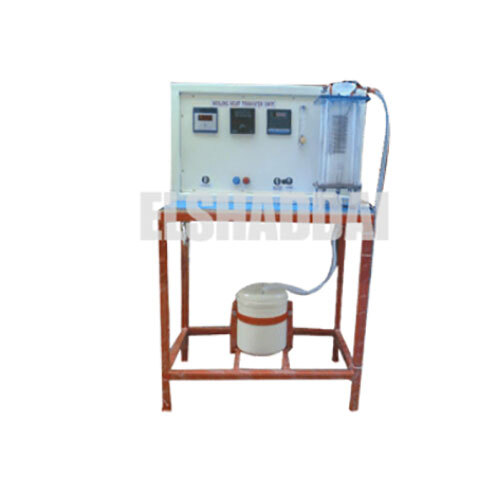
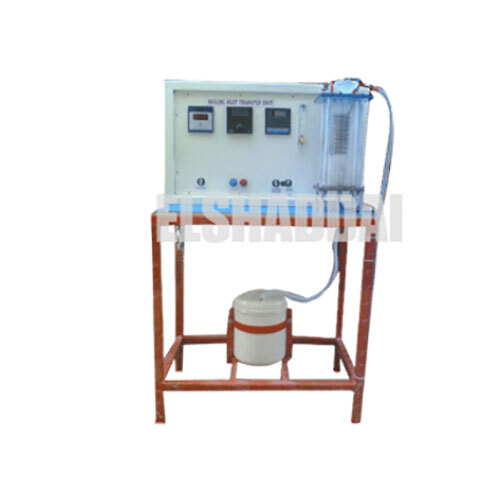
A Boiling Heat Transfer Unit is a specialized educational and laboratory apparatus designed to facilitate the study and demonstration of boiling phenomena and heat transfer principles. These units are essential tools for students and researchers in mechanical, chemical, plant, process, and nuclear engineering, as well as engineering physics.
Efficient Learning with Transparent ObservationThe unit's large borosilicate glass section provides a clear view of boiling, making theoretical concepts tangible for students and researchers. This visibility enhances understanding of heat transfer principles, making it a valuable asset for laboratory experiments and demonstrations.
Comprehensive Safety and ControlDesigned with operator safety as a priority, this unit encloses advanced features such as a robust PID controller, over-temperature cut-off, and proper earthing. The built-in control panel consolidates operational convenience and safety, ensuring reliable use in laboratory environments.
Durable and Energy-Efficient ConstructionBuilt from powder-coated mild steel, quality stainless steel, and well-insulated components, the unit is engineered for long-term use and energy conservation. The corrosion-resistant materials and efficient heater provide consistent performance and minimize operational costs.
FAQ's of Boiling Heat Transfer Unit:
Q: How does the Boiling Heat Transfer Unit operate in a laboratory setting?
A: The unit uses an immersion heater controlled by a PID temperature controller to raise the temperature of the liquid inside the 5-liter stainless steel vessel. A magnetic stirrer ensures even heat distribution, while the borosilicate glass section allows users to observe the boiling process directly. Safety features like over-temperature cut-off protect both users and equipment.
Q: What are the main benefits of using this unit for boiling heat transfer studies?
A: Key benefits include visual access to boiling through the transparent borosilicate glass, precise temperature control (1C accuracy), energy efficiency due to thermal insulation, and comprehensive safety measures. These features support effective learning, experimentation, and data reliability.
Q: When should the drain valve be used, and what is its material?
A: The stainless steel ball valve drain is typically used after completing an experiment to safely and efficiently remove the liquid from the vessel. This facilitates cleaning, maintenance, and preparation for subsequent experiments.
Q: Where is this Boiling Heat Transfer Unit manufactured and supplied from?
A: This unit is manufactured, exported, and supplied by a provider based in India, ensuring high quality and export-worthy packaging suitable for various institutions worldwide.
Q: What safety features are integrated into the control panel of the unit?
A: The built-in control panel includes an over-temperature cut-off to prevent overheating and earthing to eliminate electric hazards, ensuring safe operation during experiments.
Q: Can the temperature be visualized and controlled accurately during experiments?
A: Yes, the unit is equipped with a digital display and a PID temperature controller, offering precise regulation and real-time temperature monitoring for consistent experimental results.
Q: What is the recommended process for using the magnetic stirrer feature?
A: Before starting the experiment, ensure the magnetic stir bar is placed inside the vessel. Activate the magnetic stirrer via the control panel to maintain uniform mixing and temperature distribution throughout the process.

 Send Inquiry



 Send Inquiry

 Send Inquiry