About Rapid Chloride Permeability Tester
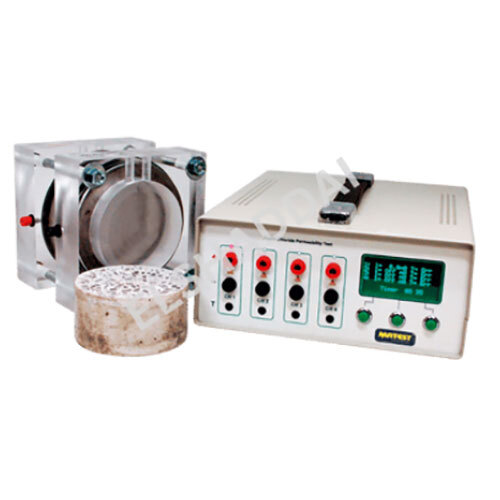
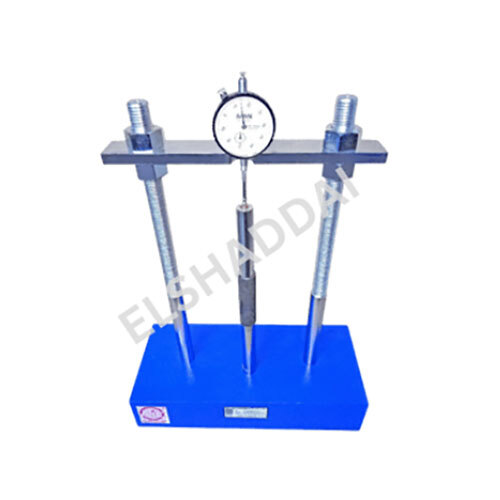
A Rapid Chloride Permeability Tester (RCPT) is a specialized laboratory instrument used in civil engineering and construction to assess the
resistance of concrete to chloride ion penetration. This test is crucial for evaluating the durability and potential service life of concrete structures, especially those exposed to chloride-rich environments like marine structures, bridge decks treated with de-icing salts,
Comprehensive Chloride Testing SolutionFacilitating thorough analysis of concrete durability, the Rapid Chloride Permeability Tester offers a seamless testing experience for up to six samples simultaneously. Automatic data recording streamlines results management, while digital controls and a user-friendly interface ensure precise operation. The robust construction and compliance with ASTM C1202 make it an excellent choice for research and quality control laboratories seeking dependable testing equipment.
Advanced Safety and Precision FeaturesThis tester is engineered for safe laboratory operations with integrated overcurrent and over-temperature safeguards. With digital controls and reliable accuracy (1%), users can trust the integrity of their results. The mild steel, powder-coated body provides lasting durability, while the borosilicate glass cells guarantee resistance to high temperatures, making the unit ideal for frequent laboratory use.
FAQ's of Rapid Chloride Permeability Tester:
Q: How does the Rapid Chloride Permeability Tester operate?
A: The tester works by evaluating the passage of chloride ions through concrete samples under a specified voltage. It utilizes a 6-channel test cell arrangement, allowing you to test up to six specimens simultaneously. Automatic data logging and digital controls simplify operation and data collection, ensuring accurate and efficient test cycles.
Q: What is the standard compliance for this equipment?
A: This Rapid Chloride Permeability Tester strictly complies with ASTM C1202, the recognized standard for measuring the electrical conductance of concrete to assess its resistance to chloride ion penetration.
Q: When is this tester most effectively used?
A: The device is best utilized in laboratory settings when precise assessment of concrete durability is required, especially for quality control, research, and development projects where chloride permeability needs to be established rapidly and accurately.
Q: Where is the tester typically used?
A: It is primarily intended for laboratory environments-such as research institutions, quality control laboratories in the construction industry, and material testing facilities-thanks to its robust design and advanced features.
Q: What is the test process for chloride permeability?
A: Concrete samples are prepared and placed into the borosilicate glass test cells. The system applies a constant voltage across the specimens, and the resulting current is monitored over a test period of up to 6 hours. The digital logger automatically records data, which is then used to calculate chloride ion permeability according to ASTM C1202.
Q: How does this tester benefit laboratory operations?
A: Laboratories benefit from greater testing efficiency, accuracy, and data integrity with this tester. Its multi-sample capability, automated logging, and digital controls streamline the workflow, reduce operator error, and ensure reliable compliance with international standards.
Q: What safety measures are incorporated into the tester?
A: The system is equipped with overcurrent and over-temperature protection, safeguarding both the equipment and user during operation. Its robust mild steel body and superior glass components further ensure consistent and safe laboratory performance.

 Send Inquiry




 Send Inquiry

 Send Inquiry