About Drag Coefficient Apparatus
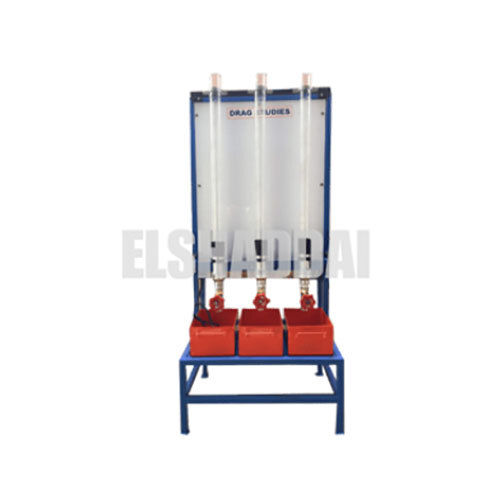
The Drag Coefficient Apparatus is a precision laboratory instrument designed to help students and researchers study the
behavior of particles falling through fluid media and to determine the
drag coefficient as a function of flow conditions. It allows hands-on exploration of fluid resistance forces and the effects of Reynolds number on particle motion
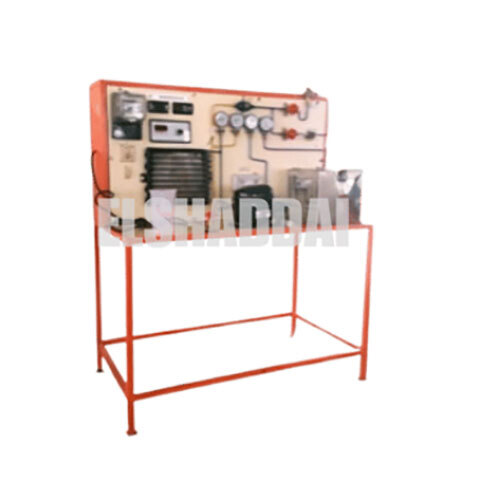
Reliable Construction and DesignRobustly framed with epoxy powder-coated mild steel, this apparatus is crafted for longevity and stability in laboratory environments. The leak-proof PVC tank, corrosion-resistant paint, and acrylic test section provide both chemical resistance and easy visual monitoring. The detachable models and rectangular base enhance user convenience and flexibility during experiments.
Precise Measurement and ControlOffering accuracy of 1% in flow measurement, the apparatus is factory calibrated for dependable results. The system features a single-phase 230V submersible centrifugal pump with adjustable flow rate (0.5 to 3.0 LPM). An analog U-tube manometer with a gradient scale supplies clear, real-time readings, while the manual valve ensures precise flow control throughout all tests.
Safe and User-Friendly OperationEngineered with laboratory safety in mind, the apparatus includes overload protection through an integrated circuit breaker. The closed-loop water circulation allows clean and repeatable operation, minimizing waste. With easy maintenance, simple model switching, and up to 60C temperature resistance, it is well suited for educational and research applications.
FAQ's of Drag Coefficient Apparatus:
Q: How is the drag coefficient measured using this apparatus?
A: The drag coefficient is determined by flowing water through the test section containing one of the supplied models (sphere, cylinder, or disc) and measuring the pressure difference via the U-tube manometer. By controlling the flow with the manual valve, users can observe the pressure drop across the model, allowing calculation of drag forces and corresponding coefficients.
Q: What types of test models are provided, and can they be easily swapped?
A: The apparatus comes with a standard set of three detachable models: a sphere, a cylinder, and a disc. These models can be easily interchanged within the cylindrical test section, enabling comparative studies and varied experiments in fluid dynamics.
Q: Where is this equipment typically used?
A: This apparatus is commonly used in fluid mechanics laboratories in educational institutions, research centers, and technical training facilities in India and abroad, facilitating experiments on drag and flow characteristics.
Q: What safety features are included during operation?
A: Safety is ensured by an integrated circuit breaker that provides overload protection for the apparatus. The leak-proof PVC/plastic tank and closed water circulation system also help maintain a secure and tidy work environment.
Q: What is the process for calibrating the apparatus and ensuring measurement accuracy?
A: The Drag Coefficient Apparatus is factory-calibrated, guaranteeing accuracy within 1% for flow measurements. Minimal user calibration is required, and readings can be trusted from the moment the apparatus is set up in the lab.
Q: What are the benefits of using this drag coefficient apparatus in laboratory experiments?
A: This apparatus offers precise measurement, repeatable experiments, and robust construction, making it ideal for teaching fundamental fluid dynamics concepts. Its corrosion-resistant, easy-to-maintain design and reliable safety features contribute to an effective and safe laboratory experience.

 Send Inquiry




 Send Inquiry

 Send Inquiry